
Achilles Tendonitis in Jumping and Running Athletes: How to Prevent It
This article is for athletes, parents and coaches in sports with lots of running and jumping, like basketball and soccer. You will learn what the Achilles tendon does, why it gets injured, and which habits and exercises help prevent Achilles tendon pain.
Strong calves, healthy tendons: strength, warm-up and recovery programs in the free PRO ATHLETE app.
1. How does the Achilles tendon work? How does it get injured?
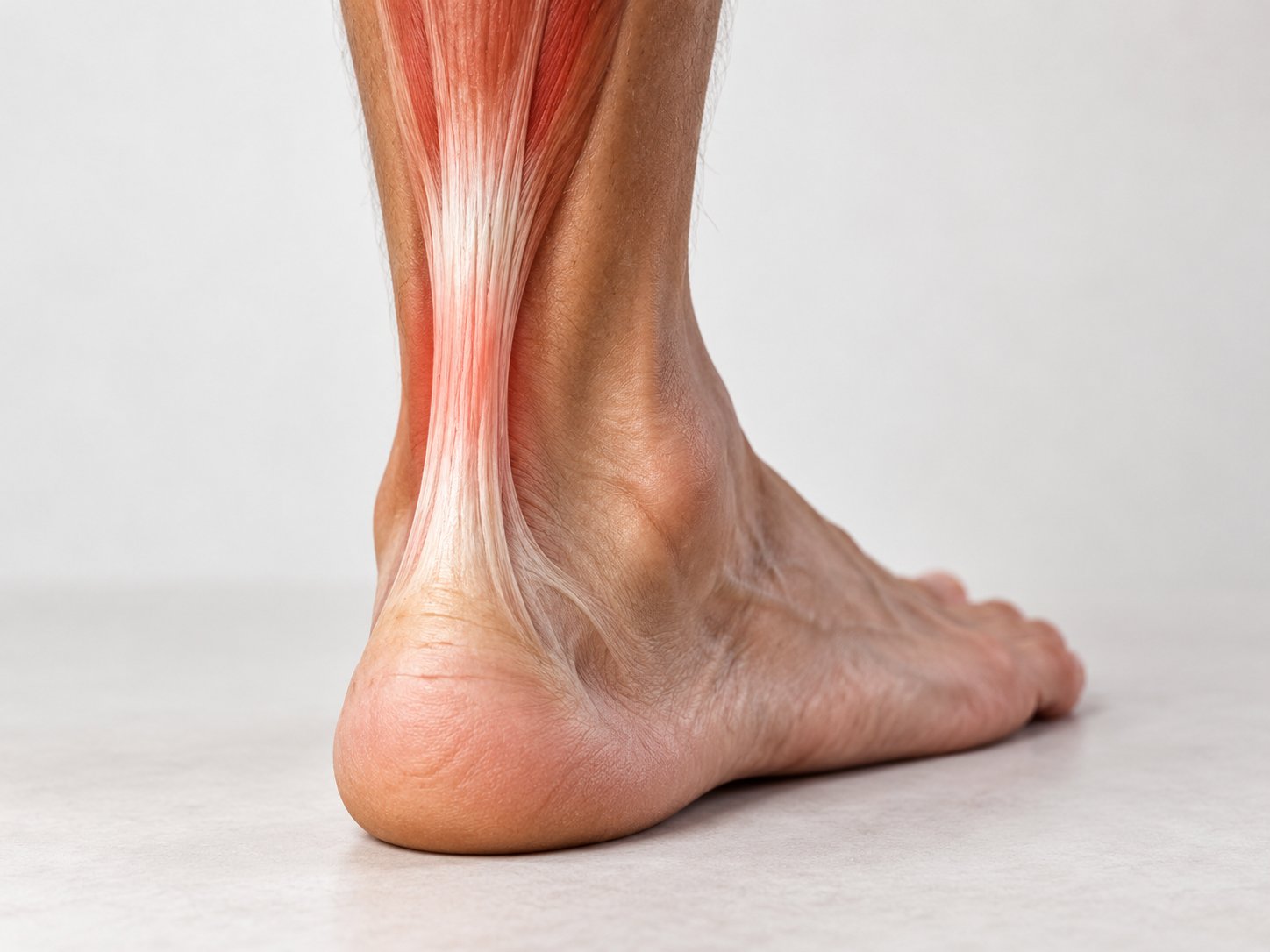
The Achilles tendon is the largest and strongest tendon in your body. It connects your calf muscles to your heel and plays a key role in everyday movements like walking, running and jumping. Every time you push off the ground to sprint or jump, your Achilles tendon is hard at work!
Even though it’s incredibly strong, the Achilles tendon can become painful when it’s put under more stress than it’s used to. This often happens when athletes:
- suddenly increase their training load instead of increasing it progressively;
- run or jump more than usual;
- train too much and recover too little.
Over time, this can lead to Achilles tendinopathy, a condition that causes pain and stiffness in the tendon, especially during sports and physical activity.
2. I have Achilles tendon pain. What should I do?
Here are some general guidelines when you have Achilles pain:
- Temporarily stop the activities that aggravate your pain, until you see a physiotherapist. If you keep irritating your tendon, the pain can get worse and take longer to go away.
- Reduce your training volume and intensity. It’s pretty rare that I tell an athlete to completely stop all physical activity and sports. Usually, with younger athletes, we start by reducing the overall training volume and intensity. For example, if the athlete has pain at the end of long and intense practices, we suggest sticking to moderate intensity with a maximum time (e.g., jogging only, no sprinting, and 1.5 hours per day maximum). Another example: if an athlete trains 15 hours per week, we might tell them to train a maximum of 7.5 hours per week. This is just an example: cutting the hours by 50% is not always the recommendation. What we suggest depends on what seems to aggravate the pain: more volume, or more intensity?
- Do your rehab exercises. After the assessment and the training recommendations, your physiotherapist gives you the right exercises. They usually include progressive Achilles strengthening exercises that are pain-free or cause only very mild pain (isometrics and/or eccentrics with increasing difficulty), and pain-free mobility exercises. Be very consistent with your exercises: they are often necessary to get rid of the pain.
- Don’t go back to your usual training volume and intensity too quickly. Achilles tendons are very irritable: if you go back too quickly, it can prolong your rehab. Listen to your physio ;)
3. How to prevent Achilles tendon pain
- Take your overall training volume seriously. Overtraining is one of the most frequent causes of Achilles tendon pain. A good rule of thumb for overuse injuries: don’t train more hours per week than your age, games included.
- Take 1 to 2 rest days per week. Too many athletes skip their rest days. Your body needs time to recover, and under-recovering can cause overuse injuries such as Achilles tendon pain.
- Avoid sudden increases in training volume or sprinting. Have you been taking a break from sports for a few weeks, or during the off-season? That’s totally OK, but make sure you increase your training load gradually when you get back at it!
- Strengthen your calves. Single-leg calf raises, weighted calf raises, and single- or double-leg pogo hops are all great exercises to add to your routine.
A great prevention exercise: pogo jumps
Pogo jumps strengthen your calves, improve ankle stiffness and build your Achilles tendon’s ability to handle running and jumping. Stay on the balls of your feet and do small, quick bounces. Introduce them gradually and always keep them pain-free, especially if you’re new to plyometrics.
3 sets of 15–30 seconds
4. Sever’s disease: heel pain in growing athletes
Sever’s disease (also called calcaneal apophysitis) is a common cause of heel pain in growing athletes, especially in sports with lots of running and jumping, like basketball and soccer.
Unlike Achilles tendinopathy, Sever’s disease affects the growth plate at the back of the heel bone, where the Achilles tendon attaches. During growth spurts, this area can become irritated by repetitive stress, leading to heel pain during or after sports.
What should you do if your young athlete has Sever’s disease?
The guidelines are similar to those for Achilles tendon pain:
- Modify training: temporarily reduce running, jumping and other activities that aggravate the pain.
- Manage symptoms: supportive shoes, heel cups or heel lifts, and ice after activity may help relieve discomfort temporarily.
- Work on strength and mobility: calf strengthening and gentle stretching may help, depending on the athlete’s symptoms and stage of growth. Your physiotherapist will guide you.
- Return gradually: increase sports participation as the pain improves, avoiding sudden increases in training load.
Sever’s disease is usually temporary and improves as the growth plate matures. However, recovery can take weeks to months, and symptoms may come and go during growth.
Build strong, resilient tendons with PRO ATHLETE
Download the free PRO ATHLETE app for strength, warm-up and recovery programs designed by health professionals for athletes who run and jump.
Frequently asked questions
How long does Achilles tendon pain take to heal?
It depends on many factors. The milder the pain and the less time it has been there, the quicker it usually goes away. The stronger the pain and the longer it has been there, the longer it usually takes to heal.
Another factor is reducing the activities that irritate the tendon: if you don’t remove or reduce what triggers your pain, it can linger longer. In general, the sooner you start your rehab and adapt your activities to avoid irritating the tendon, the sooner your pain will go away. For young athletes, it can take anywhere from 2 weeks to several months, depending on the situation.
What is the best treatment for Achilles tendon pain?
There is no one-size-fits-all treatment. The best treatment includes a proper assessment and a rehab plan guided by a physiotherapist, and being very diligent with your rehab exercises.
The other part is modifying your physical activity and reducing the load on the tendon, to give it time to heal. Specific exercises and guidelines have to be adapted to your personal situation.
Can I keep playing sports with Achilles tendon pain?
The easy answer is usually yes, with reduced training volume. The hard part is always “how many hours per week” or “what exactly can I do.” As I mentioned above, it’s pretty rare that I tell a young athlete to completely stop their sport. However, reducing training load and volume is usually necessary to get rid of the pain.
Your physiotherapist will tell you exactly what to do (how many hours per week, and how intense your practices and games can be) based on your personal situation.
Sources
- Jayanthi N.A. et al. Sports-Specialized Intensive Training and the Risk of Injury in Young Athletes: A Clinical Case-Control Study. American Journal of Sports Medicine, 2015.
- Martin R.L. et al. Achilles Pain, Stiffness, and Muscle Power Deficits: Midportion Achilles Tendinopathy Revision – 2024. Journal of Orthopaedic & Sports Physical Therapy, 2024.
- Silbernagel K.G. et al. Continued Sports Activity, Using a Pain-Monitoring Model, During Rehabilitation in Patients With Achilles Tendinopathy: A Randomized Controlled Study. American Journal of Sports Medicine, 2007.